
Tap water
Palmdale Water Quality: The 2025 Report Explained
Palmdale water quality met every standard in 2025, according to the Palmdale Water District's report: all 12 detected primary contaminants stayed below their limits, and the water is moderately hard at 6.5 to 6.8 gpg.
On this page
- Where does Palmdale's water come from?
- Is Palmdale water hard?
- What does the 2025 Palmdale water quality report show?
- How much chromium 6 is in Palmdale water?
- What about arsenic, nitrate and lead?
- Why does Palmdale water taste of chlorine?
- Where do you contact the Palmdale Water District?
- Common questions
Key takeaways
- Palmdale Water District's 2025 Consumer Confidence Report announces "100% regulatory compliance in 2025".
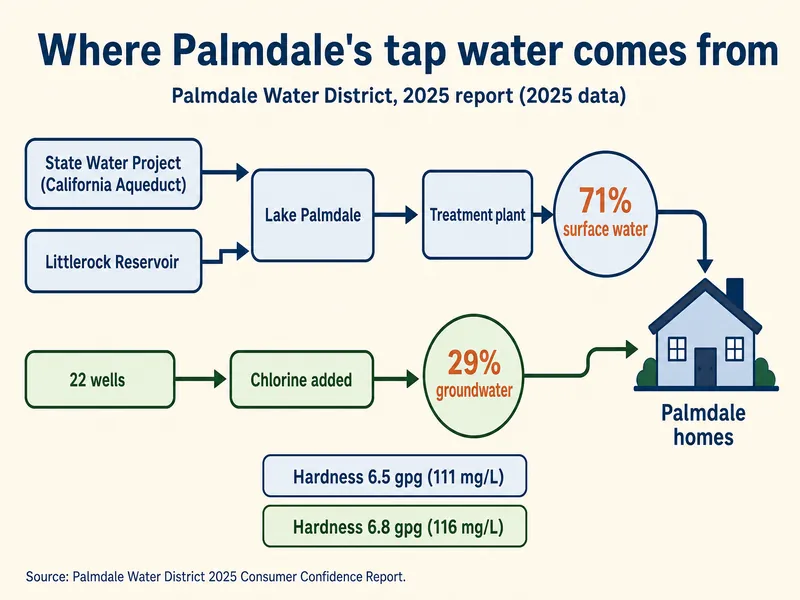
- About 71% of the district's 2025 water was surface water (State Water Project and Littlerock Reservoir, stored in Lake Palmdale) and 29% came from 22 wells.
- Average hardness was 116 mg/L (6.8 gpg) for the wells and 111 mg/L (6.5 gpg) after treatment for surface water, both moderately hard on the USGS scale.
- Chromium 6 in the wells ranged from 0.5 to 9 µg/L (average 4), under California's 10 µg/L limit; none was detected in surface water.
- Lead at the 90th percentile was not detected in the district's 2024 round of 50 home samples.
- The district disinfects with chlorine; its FAQ says it "does not disinfect with the compound chloramine".
This guide is not the Palmdale Water District and has no tie to it. The district's own 2025 report is here; figures below are quoted from it with their year.
Where does Palmdale's water come from?
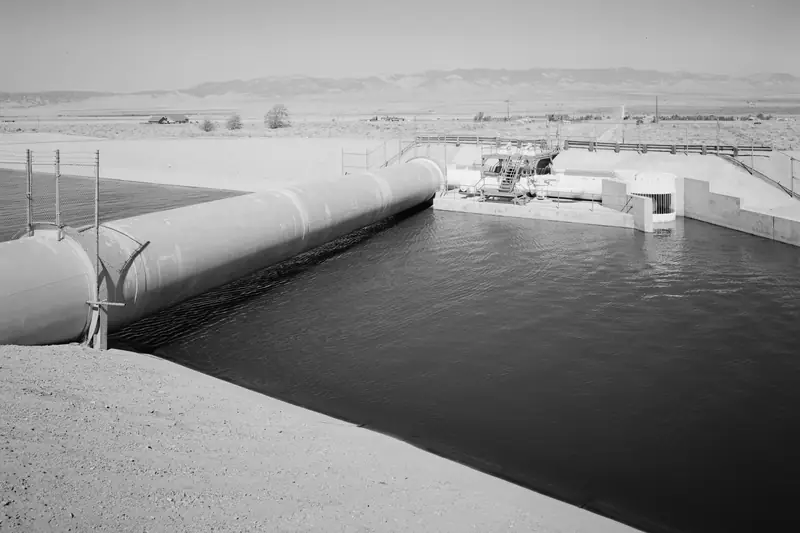
Palmdale's water comes from three sources: State Water Project water from the California Aqueduct, runoff held in Littlerock Reservoir, and 22 groundwater wells. In 2025 the district delivered about 71% surface water and 29% groundwater, and its 2025 report puts the water used by customers at approximately 16,000 acre-feet (about five billion gallons).
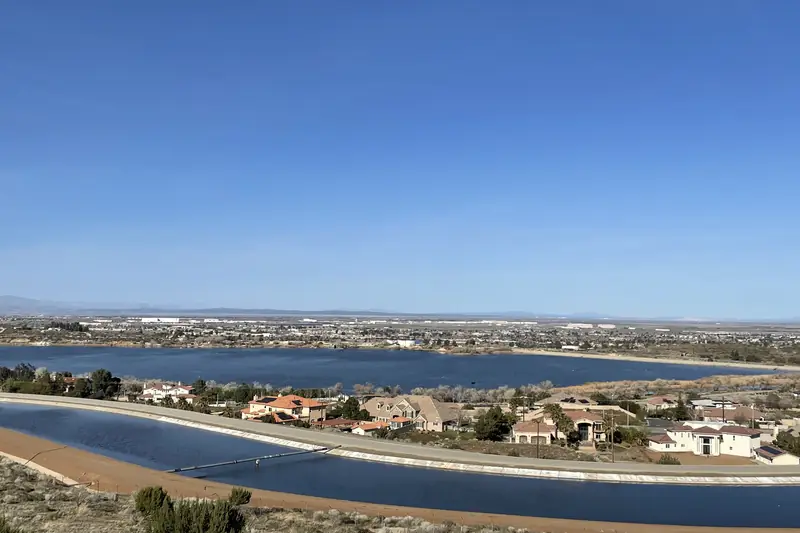
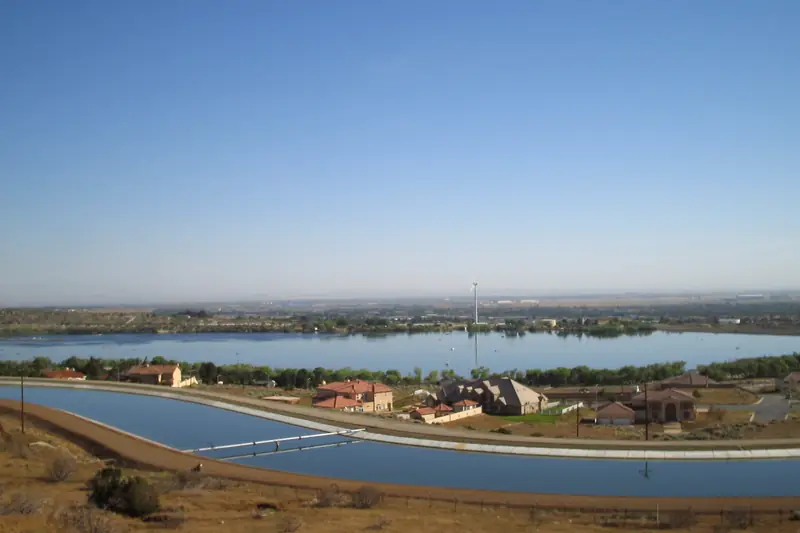
The aqueduct and reservoir water both go into Lake Palmdale for storage before treatment. The district received 10,650 acre-feet from the State Water Project in 2025, diverted 4,768 acre-feet from Littlerock Reservoir in the 2025 water year, and pumped 5,387 acre-feet from its wells. Those three volumes add up to 20,805 acre-feet, more than the report's rounded 16,000 for water used. The report does not reconcile the two, but they are not measured the same way: the Littlerock figure covers a water year (October 2024 to September 2025), and aqueduct and reservoir water goes into Lake Palmdale storage before treatment, so not all of it reaches customers in the same year. Littlerock Reservoir is fed by snowmelt and rain from the San Gabriel Mountains; well water is treated with chlorine and pumped straight into the pipes.
Is Palmdale water hard?
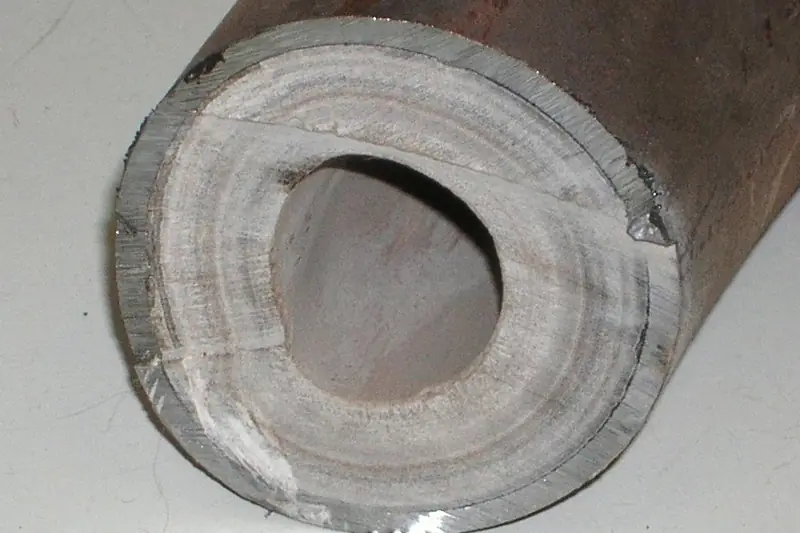
Palmdale water is moderately hard, not very hard: the district's 2025 report gives its wells an average of 6.8 gpg and its treated surface water 6.5 gpg. The report uses gpg only; multiplied by 17.1, those are 116 and 111 mg/L, inside the USGS moderately hard band of 61 to 120 mg/L.
Wells vary more than the average shows, from 1.9 to 15 gpg (32 to 257 mg/L), while treated surface water stayed between 5.6 and 7.4 gpg. That explains why neighbors can describe their water differently. On water like this a softener is optional, a choice about scale and spotting; the water hardness comparison and hard water stains pages cover the practical side.
What does the 2025 Palmdale water quality report show?
The 2025 Palmdale water quality report shows the district met every drinking water standard: it detected 12 primary contaminants and says all were below their maximum contaminant levels (MCLs). Primary standards are the health-based limits; secondary standards cover taste, odor and appearance. Unless noted, the chart covers testing from January 1 to December 31, 2025.
Some numbers in the chart are older because the state allows less frequent monitoring for contaminants that change slowly, so groundwater results can carry 2024 dates. The report also lists "additional constituents" such as hardness, sodium and total dissolved solids (TDS). TDS averaged 250 mg/L in surface water and 254 mg/L in groundwater, against the 1,000 mg/L secondary standard the chart lists. Each column is decoded in how to read your CCR.
| Contaminant | Treated surface water | Groundwater (22 wells) | Limit |
|---|---|---|---|
| Hardness | average 6.5 gpg (111 mg/L); low 5.6, high 7.4 gpg | average 6.8 gpg (116 mg/L); low 1.9, high 15 gpg | No health limit |
| Hexavalent chromium | ND | 0.5 to 9 µg/L, average 4 | 10 µg/L MCL |
| Arsenic | - | ND to 3 µg/L, average ND | 10 µg/L MCL |
| Nitrate (as N) | - | ND to 6 mg/L, average 2 | 10 mg/L MCL |
| Total dissolved solids | 250 mg/L average | 254 mg/L average | 1,000 mg/L secondary MCL |
| Chlorine residual, distribution system | 0.3 to 3.6 mg/L, running annual average 1.0 | (one figure for the whole system) | 4.0 mg/L MRDL |
| Lead, 90th percentile (2024, 50 homes) | ND | ND | 15 µg/L action level |
How much chromium 6 is in Palmdale water?
Palmdale's wells carried 0.5 to 9 µg/L of hexavalent chromium (chromium 6) in the 2025 report, an average of 4 µg/L, and none was detected in treated surface water. California's limit for chromium 6 has been 10 µg/L since October 1, 2024, so every well result sat under it. The public health goal, a non-enforceable target set by California, is far lower at 0.02 µg/L.
The report lists natural erosion of deposits and the natural conversion of trivalent chromium among the typical sources, along with industrial discharges. Because most Palmdale water is surface water with no chromium 6 detected, a home's exposure depends on the share of well water reaching it. The hexavalent chromium page compares Palmdale with other valley systems and covers certified home filters.
What about arsenic, nitrate and lead?
All three were low in the 2025 report. Arsenic in the wells ranged from not detected to 3 µg/L, with an average of ND, against a 10 µg/L limit. Nitrate in the wells ran from ND to 6 mg/L as nitrogen, average 2, against a 10 mg/L limit.
Lead is sampled at home taps every three years. In the 2024 round of 50 samples, the 90th-percentile result was ND for lead and 0.4 mg/L for copper, well within the 15 µg/L lead and 1.3 mg/L copper action levels. The report notes lead comes mainly from service lines and home plumbing, and the district has posted a lead service line inventory. For private wells near Palmdale, these results don't apply; see arsenic in well water.
Why does Palmdale water taste of chlorine?
Palmdale water tastes of chlorine because the district uses chlorine as its disinfectant. The 2025 report lists a chlorine residual between 0.3 and 3.6 mg/L, with a running annual average of 1.0 mg/L; the cap for disinfectant (the MRDL) is 4.0 mg/L. The district's FAQ states it "does not disinfect with the compound chloramine".
Chlorine taste and odor is an aesthetic issue, and an activated carbon filter certified to NSF/ANSI 42 (the standard for aesthetic effects such as chlorine taste) addresses it at a single tap. A softener does not remove chlorine taste; the reverse osmosis vs water softener page explains what each one treats.
Where do you contact the Palmdale Water District?
Contact the Palmdale Water District through its own website, palmdalewater.org, which lists its phone line for water quality questions and complaints and posts the yearly report. This guide does not take questions on the district's behalf. The report also invites the public to board meetings on the second and fourth Mondays of each month at 6 p.m. at the district office.
The district serves most of Palmdale, but not every address, and other suppliers publish their own reports. If your bill names another supplier, the guide to who supplies your water links its report.
Palmdale Water District, 2025 report
- 71%Share of 2025 deliveries that was surface water (29% groundwater)Palmdale Water District 2025 CCR
- 6.8 gpgAverage groundwater hardness, 116 mg/L, moderately hard (2025 data)Palmdale Water District 2025 CCR
- 4 µg/LAverage hexavalent chromium in district wells (range 0.5 to 9)Palmdale Water District 2025 CCR
- 0.02 µg/LCalifornia public health goal for hexavalent chromium (2011)State Water Board
How we put this page together
Sources: the 2025 report of the Palmdale Water District (2025 data, with some groundwater samples dated 2024) and the district's FAQ page, plus the State Water Board's hexavalent chromium page and the USGS hardness classes, all opened on October 26, 2026. Hardness is converted from the district's gpg at 17.1 mg/L per grain; table values were taken from the printed chart. Left out: figures from store pages and aggregator sites, any claim about chloramine, and results for Palmdale addresses served by other systems.
Common questions
Is Palmdale tap water safe to drink?
The district's 2025 report says it reached 100% regulatory compliance and that all detected primary contaminants were below their limits. That describes the water it delivers; old household plumbing can still add metals such as lead or copper.
Does Palmdale use chloramine?
No. The Palmdale Water District's FAQ says it does not disinfect with chloramine, and the 2025 report lists chlorine as the disinfectant.
What is Lake Palmdale used for?
In the district's system Lake Palmdale stores State Water Project and Littlerock Reservoir water before it is treated. It is a storage reservoir, not a treatment step.
Who sets the limits printed in Palmdale's report?
The report's definitions say public health goals (PHGs) are set by the California EPA and federal MCL goals by the U.S. EPA, while primary MCLs are set as close to those goals as is economically and technologically feasible. Detection limits for reporting are set by the State Water Board.
How many wells does Palmdale Water District use?
Its 2025 report says groundwater was pumped from the Antelope Valley groundwater basin through 22 wells, which supplied about 29% of the year's water.
Does Palmdale water contain PFAS?
The 2025 report lists results from the federal unregulated contaminant monitoring program (UCMR 5), which includes several PFAS compounds; check the report's third table for the detected levels.
Is Palmdale water harder in summer?
The report gives yearly ranges, not seasonal figures. Treated surface water stayed between 5.6 and 7.4 gpg all year, so any seasonal swing is modest; the wells vary more.
Related guides
More help: see our Antelope Valley home water guide.