
Antelope Valley Home Water: Wells, Septic and Pipes
Antelope Valley home water is moderately hard on city systems, harder in many wells, and shaped by septic, freezing nights and long summers; this guide explains each from the suppliers' own reports.
By the Antelope Valley Home Water Guide editors · Updated
Antelope Valley Home Water Guide is a homeowner information guide. It is not a plumbing company, a water utility or a septic service, and it is not affiliated with any of them.


Key takeaways
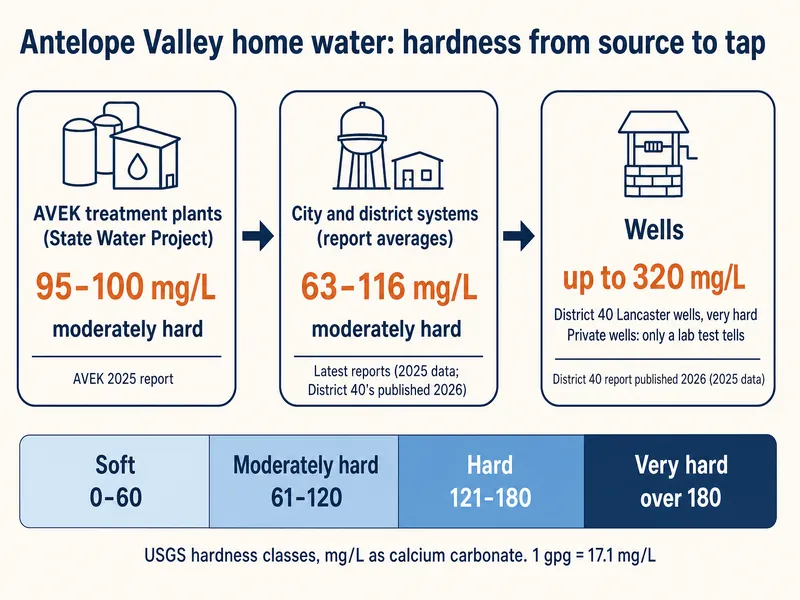
- The public systems serving Quartz Hill, Rosamond, Lancaster and Palmdale report average hardness from 63 mg/L (3.7 gpg) up to 116 mg/L (6.8 gpg): moderately hard on the USGS scale.
- Well water is where hardness climbs: District 40's Lancaster-area wells ranged from 30 to 320 mg/L in 2025 data.
- California's hexavalent chromium limit is 10 µg/L, in force since October 1, 2024 (State Water Board); Rosamond, Quartz Hill and Cal Water's Lancaster system each report readings above it.
- The EPA says to test a private well every year, and the State Water Board puts basic lab sampling at $100 to $400.
- Household septic tanks are typically pumped every three to five years, according to EPA SepticSmart.
- Lancaster's Fox Field station averages 67.9 nights a year at or below 32 °F (NOAA 1991–2020 normals).
The valley's water in five numbers
- 6.5 gpgAverage hardness of Palmdale Water District's treated surface water (111 mg/L), 2025 dataPalmdale Water District 2025 CCR
- 10 µg/LCalifornia maximum contaminant level for hexavalent chromium, effective October 1, 2024State Water Board
- 98 mg/LAverage hardness of District 40 wells, Regions 4 & 34 (Lancaster), 2025 dataLA County Waterworks District 40
- 3–5 yearsTypical pumping interval for a household septic tankEPA SepticSmart
- 67.9Average nights a year at or below 32 °F at Lancaster Fox Field, 1991–2020NOAA NCEI climate normals
How hard is Antelope Valley tap water?
Antelope Valley tap water from the public systems is moderately hard: the latest reports put average hardness between 63 mg/L (3.7 grains per gallon, or gpg) at the low end and 116 mg/L (6.8 gpg) at the high end. The USGS calls 61 to 120 mg/L moderately hard, 121 to 180 hard and anything over 180 very hard; one gpg equals 17.1 mg/L. Palmdale Water District's treated surface water averaged 6.5 gpg (111 mg/L) in its 2025 report, and its groundwater 6.8 gpg (116 mg/L).
The numbers rise where a system leans on wells. District 40's wells serving Pearblossom, Littlerock and Sun Village came in at 8.2 gpg (140 mg/L) on average, which is hard, and the single well serving Rock Creek (260 mg/L) and Cal Water's two Leona Valley wells (247 mg/L on average) run higher still. That is why the hardness-by-system guide lists every report separately instead of quoting one valley-wide figure.
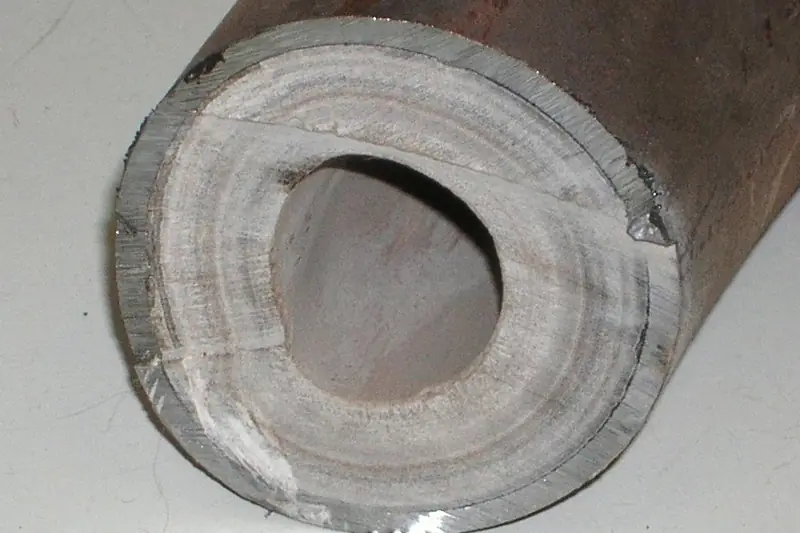
On city water, a softener is a comfort and scale choice, not a necessity; Palmdale Water District's own report says hardness at normal drinking-water levels has no adverse health effect. White crust on faucets and shower glass, spotty dishes and scale in a water heater are the everyday signs. The guides below cover what a softener does, what it costs, and the alternatives.
| Water system | Area | USGS class | Average hardness | gpg |
|---|---|---|---|---|
| Quartz Hill Water District | Quartz Hill | Moderately hard | 63.3 mg/L | 3.7 |
| LA County Waterworks District 40, Regions 4 & 34 | Lancaster wells | Moderately hard | 98 mg/L (range 30–320) | 5.7 |
| Rosamond Community Services District | Rosamond (sampled 2024) | Moderately hard | 99.5 mg/L | 5.8 |
| Cal Water, Lancaster system | Parts of Lancaster (wells) | Moderately hard | 101 mg/L | 5.9 |
| Palmdale Water District | Most of Palmdale (surface water) | Moderately hard | 111 mg/L | 6.5 |
| District 40, Regions 24, 27 & 33 | Pearblossom, Littlerock, Sun Village wells | Hard | 140 mg/L | 8.2 |
Hard water and softeners
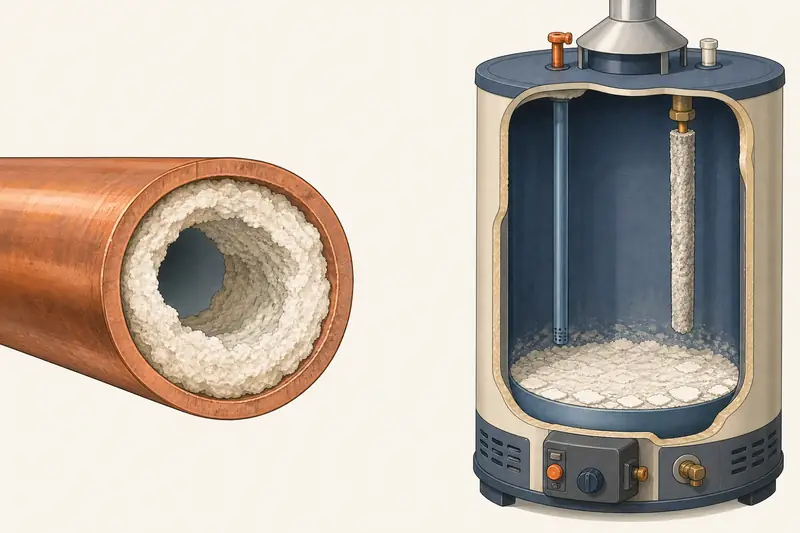 Hard water & softenersDo you need a softener here?
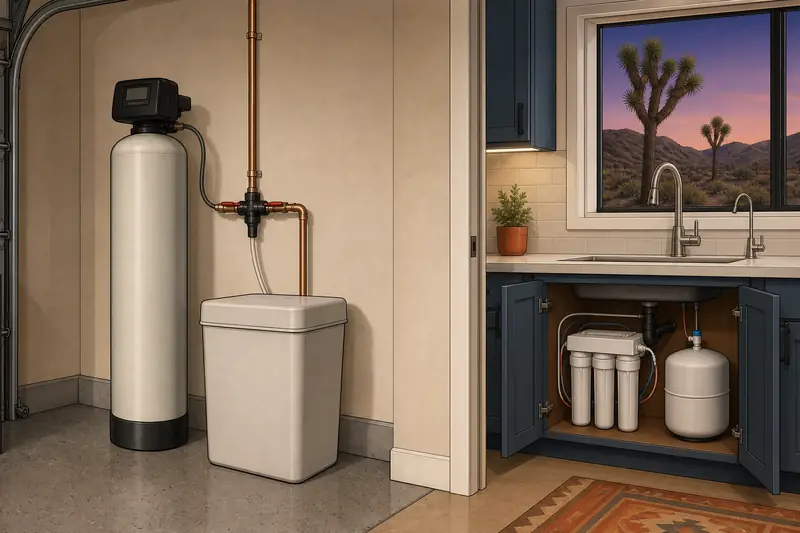 Hard water & softenersWhat a softener costs
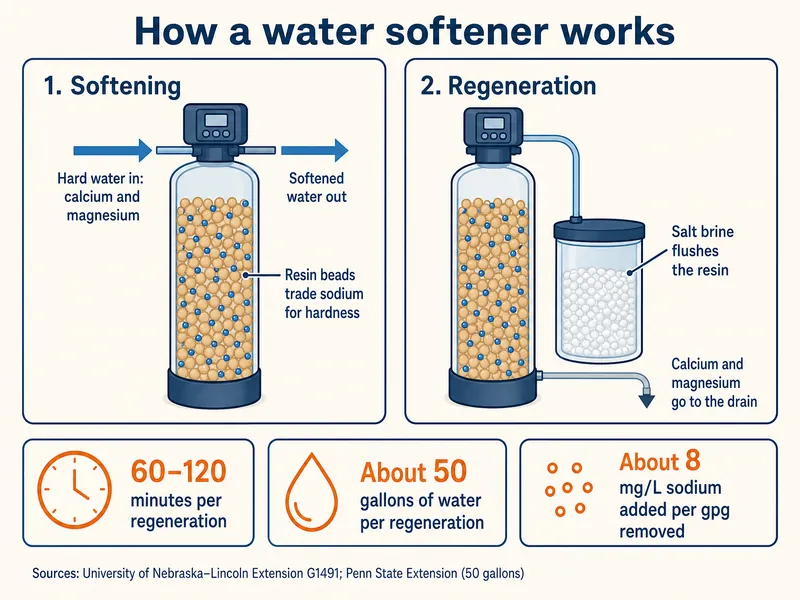 Hard water & softenersHow ion exchange softens water
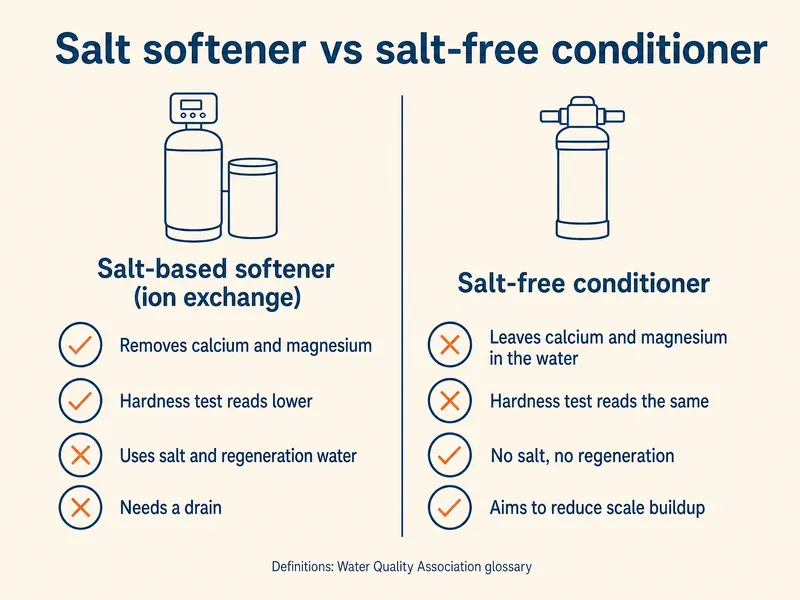 Hard water & softenersSalt-free conditioners compared
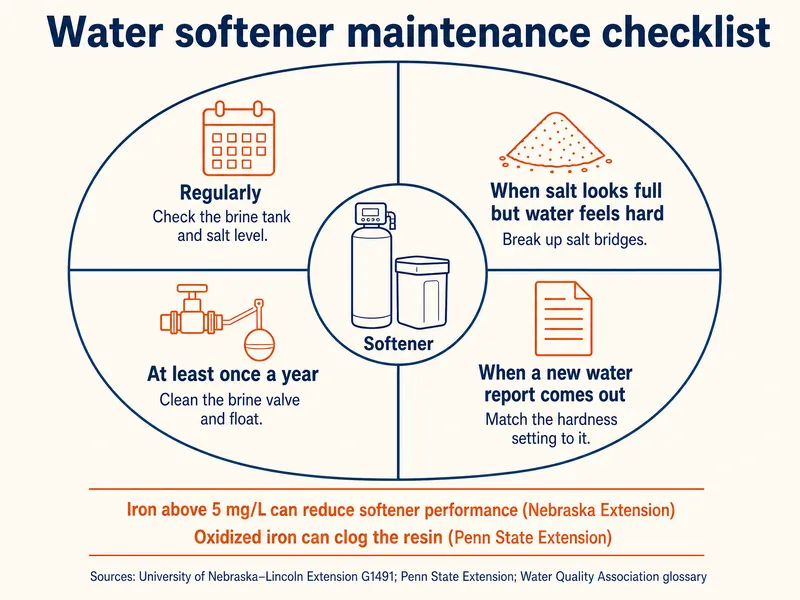 Hard water & softenersYearly softener upkeep
 Hard water & softenersRemoving hard water stains
 Hard water & softenersReverse osmosis or a softener?
Who supplies water to Antelope Valley homes?
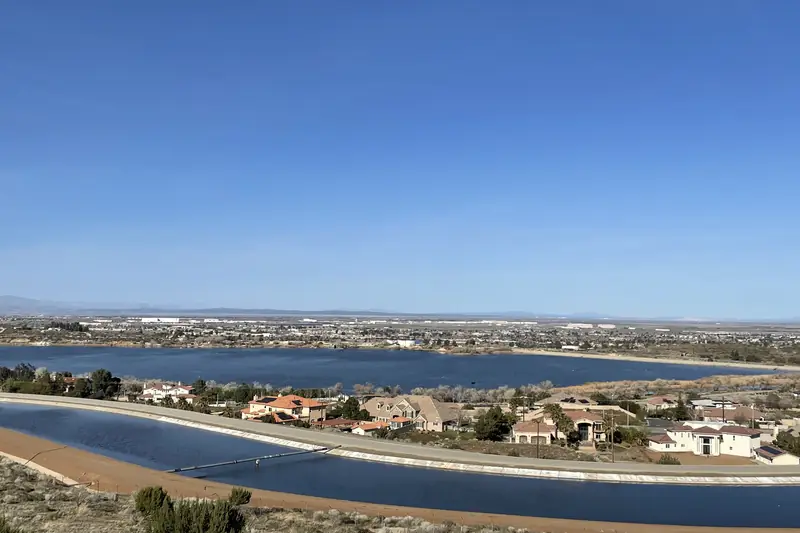
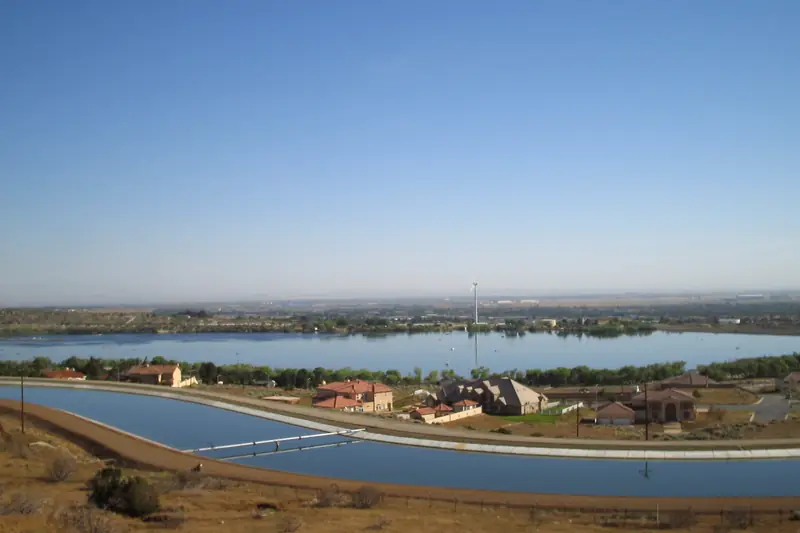
Several separate public systems supply Antelope Valley homes, and the address decides which report applies. Palmdale Water District serves most of Palmdale; LA County Waterworks District 40 serves much of Lancaster and the east-valley communities; Cal Water, Quartz Hill Water District and Rosamond Community Services District run their own systems; and many of them buy treated State Water Project water from AVEK. Small mutual water companies serve other neighborhoods. The supplier guide shows how to find yours from the water bill.
This guide is not any of those suppliers. Every system named here disinfects with chlorine, not chloramine; Palmdale Water District states plainly on its FAQ page that it does not use chloramine.
Hexavalent chromium (chromium 6) is the local topic most worth reading the report for. Rosamond's September 2026 notice says its system "recently violated a drinking water standard" for chromium 6. Quartz Hill Water District averaged 12 µg/L and Cal Water's Lancaster wells averaged 8.7 µg/L with readings up to 11; both reports say a system their size is not in violation until its compliance date (October 1, 2027 and October 1, 2028). District 40, a large system whose compliance date was October 1, 2026, lists its Lancaster-area wells in 2025 from below detection up to 18 µg/L; its 2026 report does not discuss chromium 6 compliance, so how those wells stand is a question for District 40.
Tap water
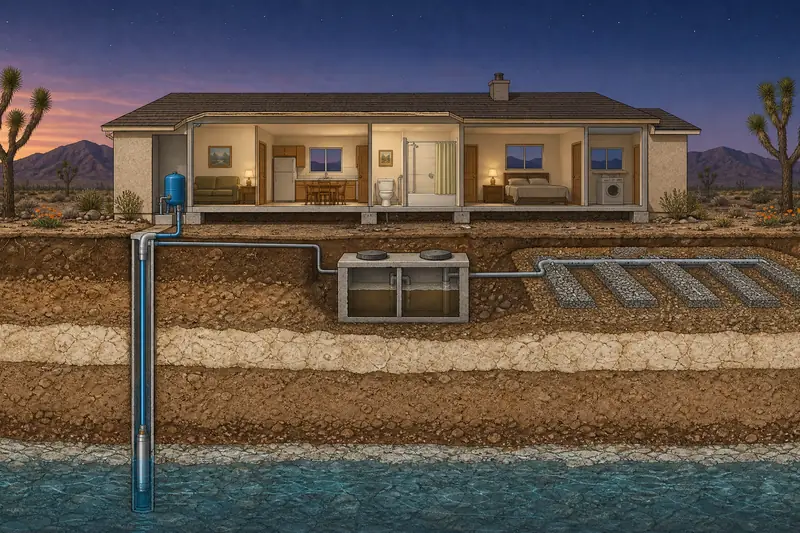
What should Antelope Valley well owners test for?
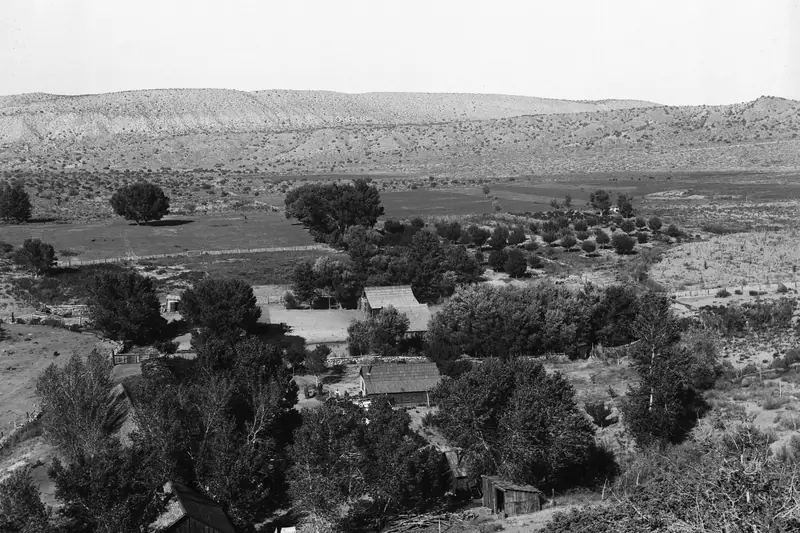
Private well owners should test every year, because no utility report covers a private well. The EPA lists total coliform bacteria, nitrate, total dissolved solids and pH as the yearly basics. For this valley, add arsenic, hexavalent chromium, uranium and hardness: a USGS survey of Antelope Valley groundwater found arsenic high in 28 percent of the primary aquifers (USGS publication FS 2012-3033).
Use a laboratory accredited by the State Water Board's ELAP program. The board's domestic well testing page says basic sampling can cost from $100 to $400 and suggests asking for a written estimate first. Treatment comes after the result, matched to what the lab found; a softener handles hardness but not arsenic, nitrate or bacteria.
Wells
Which homes are on septic, and what does that mean?
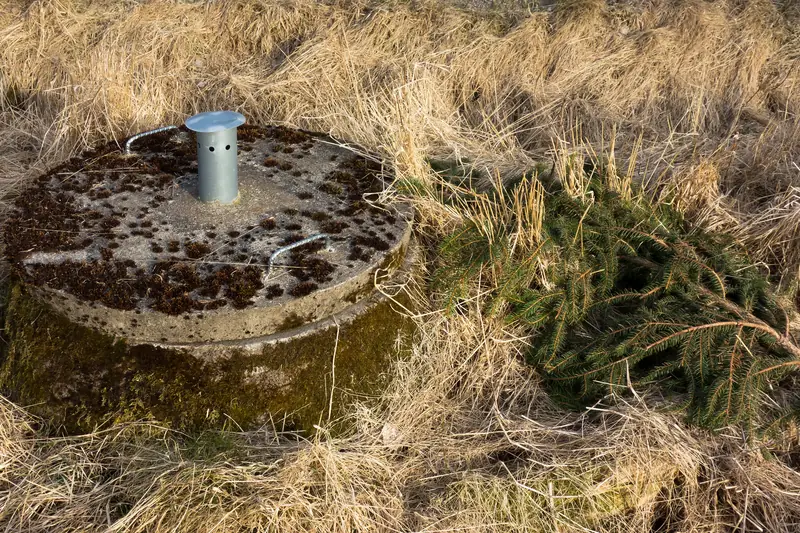
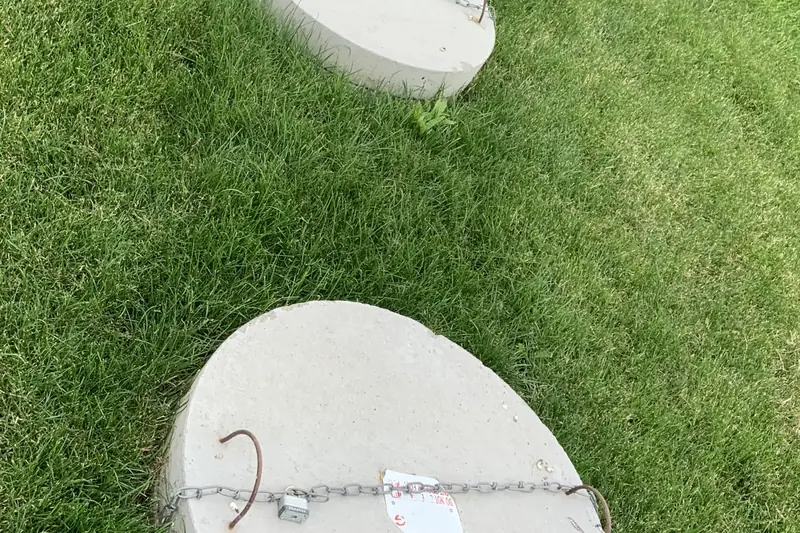
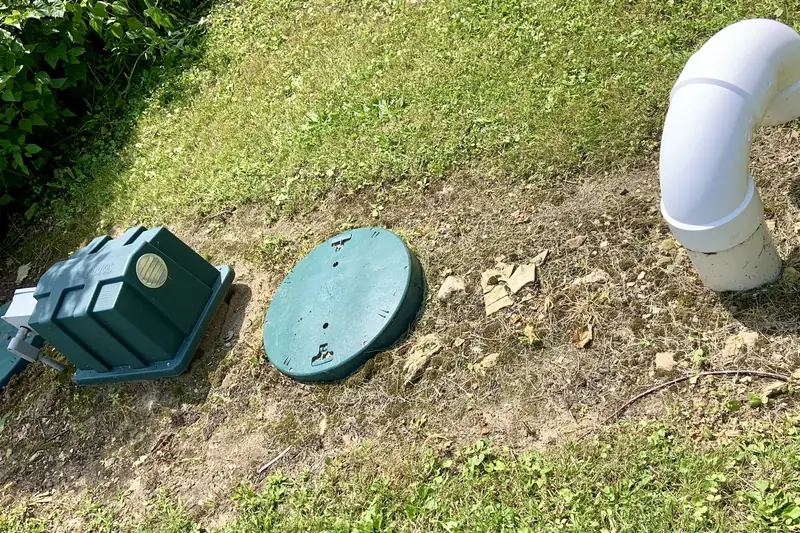
Homes that are not connected to a public sewer treat their own wastewater with a septic tank and a leach field or seepage pit. If there is no sewer charge on the bill and a buried lid sits in the yard, the home is probably on septic; the county that issued the permits can confirm what is on file.
The EPA says household tanks are typically pumped every three to five years and inspected at least every three years. In unincorporated LA County, the county's onsite wastewater program says existing systems need no action as long as they are not failing (LA County Public Health LAMP FAQ). Seepage pits, deep vertical pits that take the place of a leach field, are named in the same county rules.
Septic
What does the high-desert climate do to water heaters and pipes?
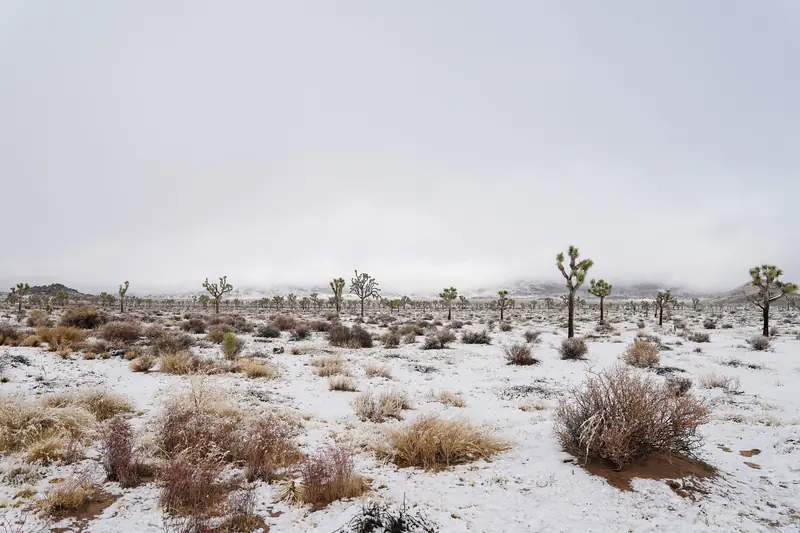
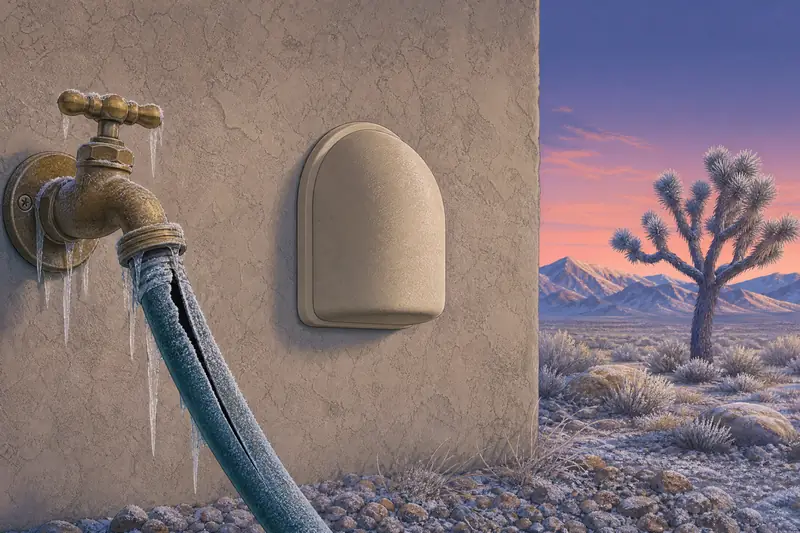
The high desert is hard on plumbing at both ends of the year: Lancaster Fox Field averages 67.9 nights a year at or below 32 °F and 35.6 days at or above 100 °F, and Palmdale Airport 53.7 freezing nights, according to NOAA's 1991–2020 normals. Hose bibs and exposed lines are the usual worries on those cold nights.
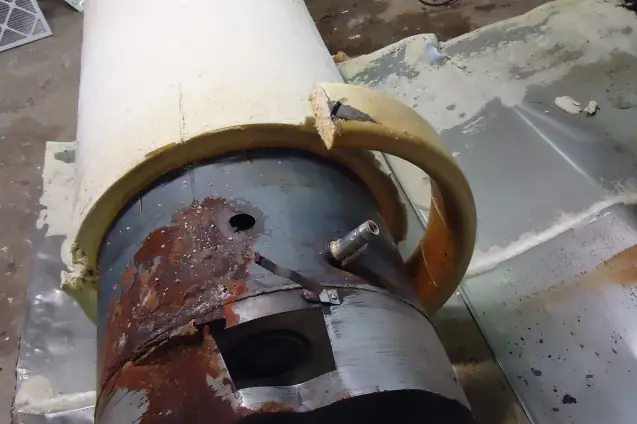
Water heaters face scale as well as cold. Rheem puts tank life at 8 to 12 years and lists hard water among the things that shorten it. California also requires water heaters to be braced against earthquakes (Health and Safety Code section 19211); the plumbing code puts straps in the upper and lower thirds of the tank, as a San Bernardino County building handout explains.
Water heaters
 Water heatersReplacement cost in California
- Water heatersHow long heaters last on hard water
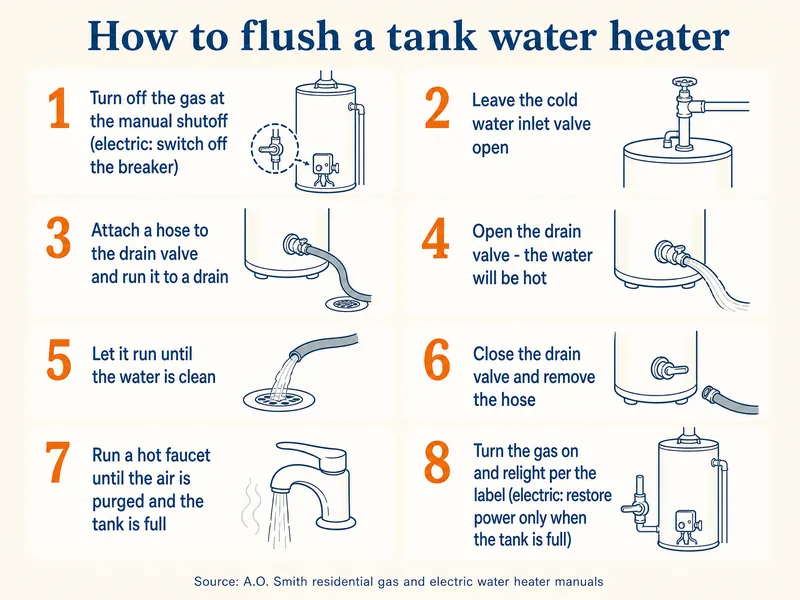 Water heatersFlushing a tank, step by step
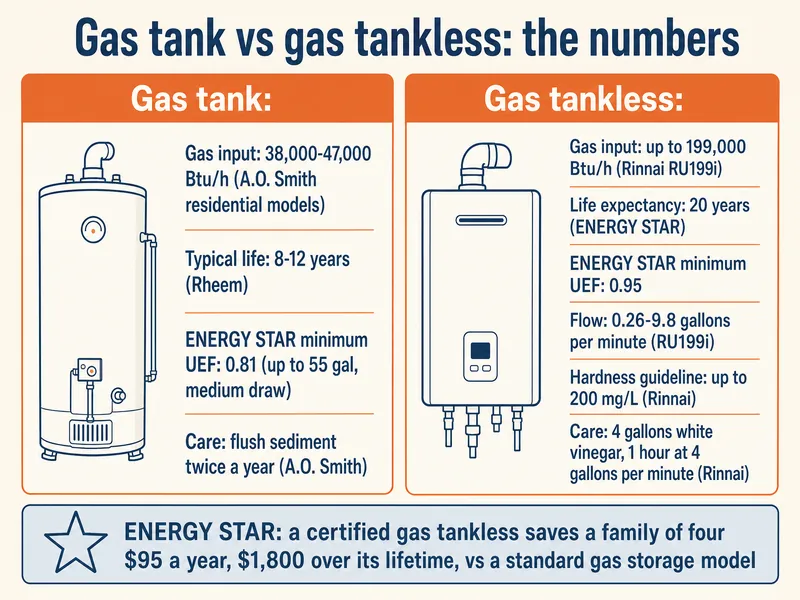 Water heatersTankless costs and trade-offs
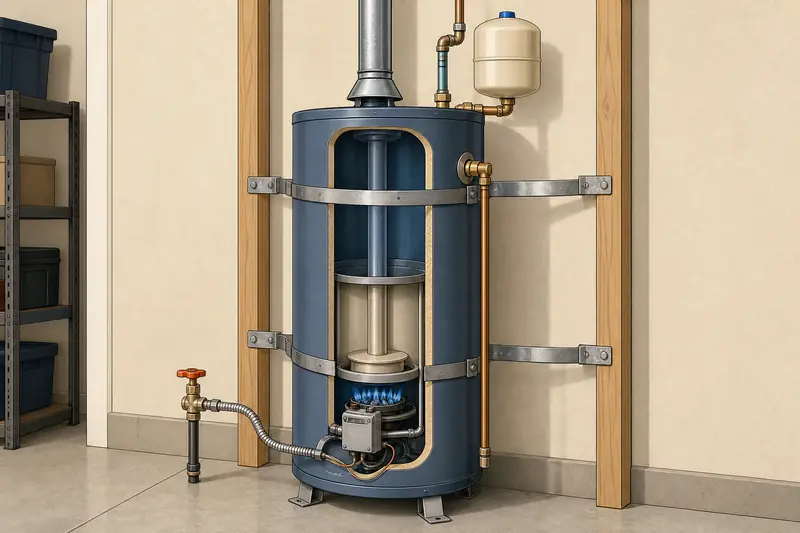 Water heatersEarthquake strap rules
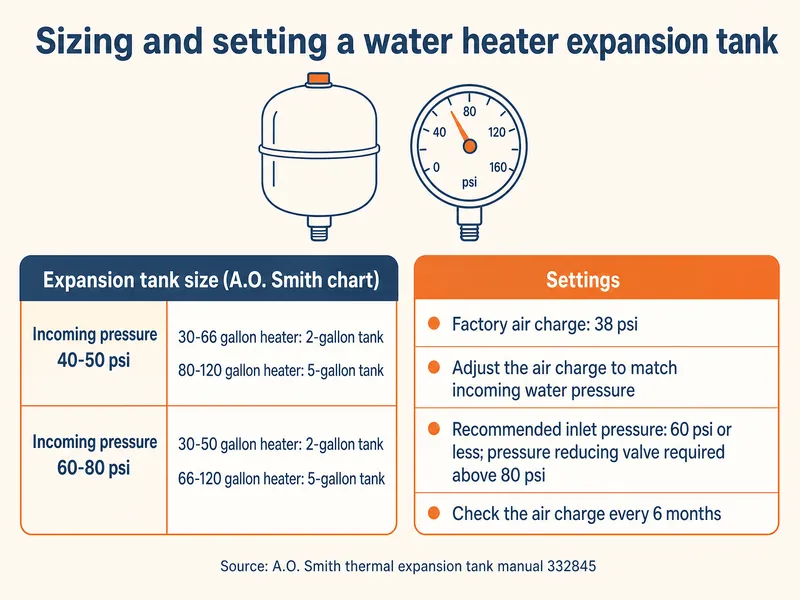 Water heatersExpansion tanks and relief valves
 Water heatersNo hot water: first checks
Pipes and leaks
Which home water jobs need a licensed plumber and a permit?
Any job of $1,000 or more in total, or any job that needs a building permit or hired workers, needs a licensed contractor in California. That threshold comes from AB 2622, a state law that took effect January 1, 2025, as the Contractors State License Board explains. The same notice says a down payment should not exceed 10 percent of the contract price. Before work starts, ask the city or county building department whether the job needs a permit.
For plumbing, that means a C-36 plumbing contractor, whose license can be checked on CSLB's website before signing. The hiring guide lists what a written bid should include, and the code and permits guide covers what inspectors look for.
Hiring and permits
Who writes this guide, and how is it paid for?
The Antelope Valley Home Water Guide is a homeowner information guide written from water suppliers' reports, agency guidance, building codes and maker manuals. It is not a plumbing company, a water utility or a septic service, and it is not affiliated with any of them. The about page explains who runs it, how we research describes the sourcing, and the team disclosure explains how SoftPro Water Systems, a store run by the same team, fits in. Every guide is also listed on the all guides page, and the privacy policy, terms of use and accessibility statement set out how the site works.
How we put this page together
This page summarizes the 2025 consumer confidence reports of Cal Water, Rosamond CSD, Quartz Hill Water District and Palmdale Water District, LA County Waterworks District 40's 2026 reports (2025 data) and AVEK's 2025 report, plus State Water Board, EPA, USGS, NOAA, CSLB, LA County Public Health and Rheem pages, all checked in October 2026. Mutual water company reports, contractor price quotes and forum anecdotes were left out.
Common questions
Is this site run by a water district or a plumbing company?
No. The Antelope Valley Home Water Guide is a homeowner information guide with no connection to any water district, utility, plumbing company or septic service in the valley. It quotes their published reports and links to them so readers can check the source.
Do Lancaster and Palmdale water meet drinking water standards?
The suppliers' own reports answer that. Palmdale Water District reports 100 percent regulatory compliance in 2025, and District 40 says its Lancaster-area water met or surpassed all health-based standards in 2025, though its report does not discuss chromium 6 compliance for wells that reached 18 µg/L. Rosamond's 2026 notice reports a chromium 6 violation, so the answer differs by system and year.
Does any Antelope Valley water system use chloramine?
None of the systems covered here does. Palmdale Water District, District 40, Quartz Hill, Rosamond, Cal Water and AVEK all report chlorine as their disinfectant in their latest reports.
Why doesn't my well match the city's water report?
Consumer confidence reports cover public systems only. A private well draws from its own depth and part of the aquifer, so its hardness, arsenic or nitrate can differ widely from a nearby district well; only a lab test of that well tells.
What do gpg and mg/L mean on a hardness result?
Both measure dissolved calcium and magnesium. Palmdale Water District prints grains per gallon; most other reports print milligrams per liter as calcium carbonate. Divide mg/L by 17.1 to get gpg.
How often should a septic system be inspected?
The EPA says at least every three years for a household system, with pumping typically every three to five years. Alternative systems should be inspected more often, generally once a year.
Where is each water system's annual report posted?
Each supplier posts its consumer confidence report on its own website once a year. The supplier guide lists the systems and how to tell which one serves an address.