
Hard water & softeners
Hard Water Stains: How to Remove Them
Hard water stains are calcium and magnesium left behind when water dries or heats; a mild acid such as white vinegar or lemon juice dissolves most of them, and drying surfaces slows them.
On this page
Key takeaways
- Hard water leaves spots on glass and film on shower doors, tubs and walls, according to University of Nebraska–Lincoln Extension; it calls hardness a nuisance, not a health problem.
- The University of Arkansas Cooperative Extension lists acids such as vinegar and lemon juice for mineral deposits and hard water stains, and warns never to mix bleach with anything but water.
- UF/IFAS Extension recommends acid-based cleaners for faucets, aerators and showerheads, and vinegar or lemon juice for coffee makers.
- Evaporative coolers concentrate minerals as water evaporates; University of Illinois Extension advises more bleed-off for harder water.
- Lancaster's Fox Field averages 35.6 days a year at 100 °F or hotter (NOAA 1991–2020 normals), long cooler seasons that build scale.
- Valley city supplies sit in the USGS "moderately hard" class in their latest reports, roughly 4 to 7 gpg, so regular cleaning keeps up with most stains.
Why the white crust forms
- 6.5 gpgPalmdale Water District treated surface water hardness, equal to 111 mg/L, from the 2025 reportPalmdale Water District CCR
- 35.6 daysDays a year at or above 100 °F, Lancaster Wm J Fox Field (1991–2020 normals)NOAA NCEI
- 50/50Vinegar-to-water mix for a stronger glass cleanerUniversity of Arkansas Cooperative Extension
- 3–30 minWait time for a baking soda and vinegar toilet cleaner before scrubbingUniversity of Arkansas Cooperative Extension
What causes hard water stains?
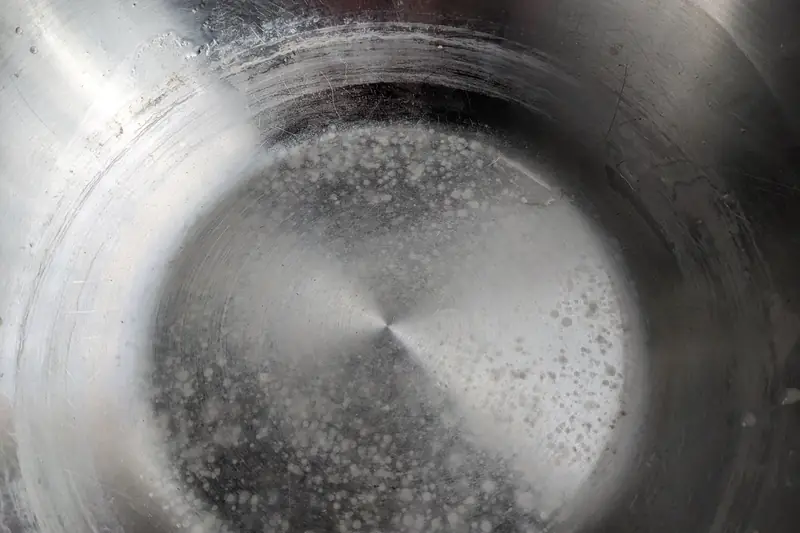
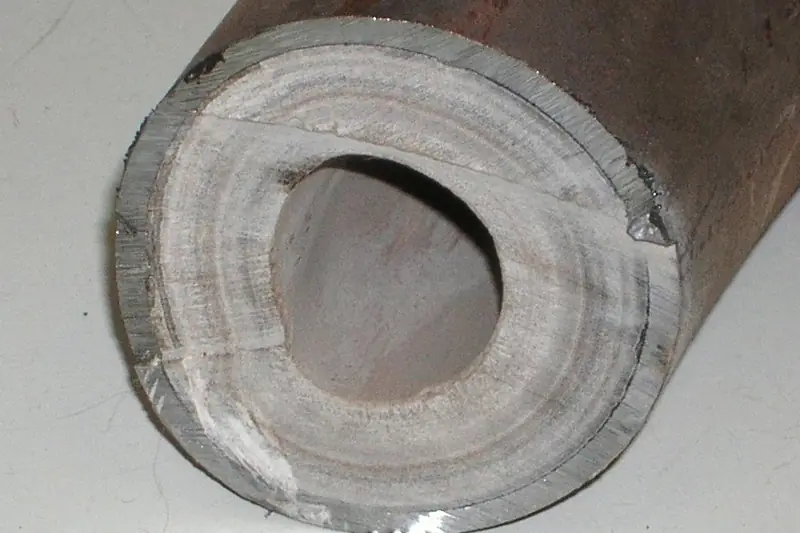
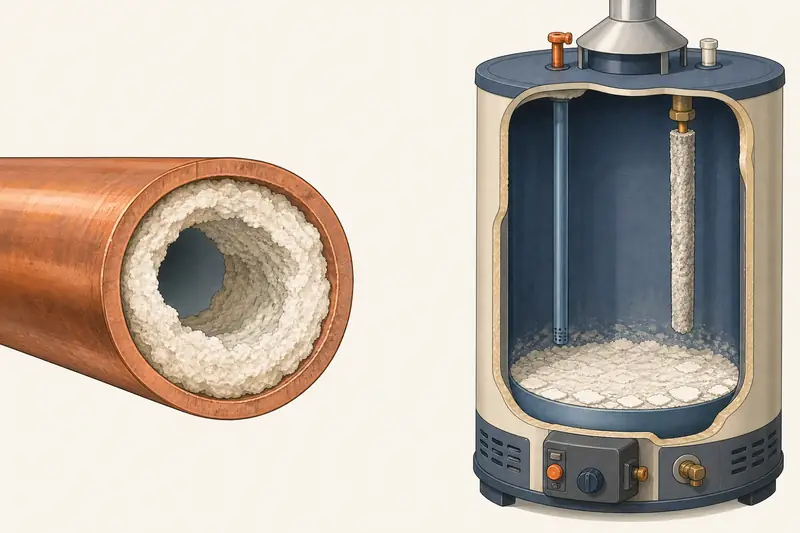
Hard water stains are the calcium and magnesium minerals left on a surface when water dries or is heated. The Water Quality Association's glossary defines scale as a coating "deposited on surfaces such as kettles, water pipes, or steam boilers that are in contact with hard water", and notes that water with calcium or magnesium carbonates is "especially likely to cause scale when heated". That is why kettles, coffee makers and water heaters crust faster than a cold tap.
Antelope Valley tap water is moderately hard, not extreme. The lowest average in the newest supplier reports is Quartz Hill Water District's (63.3), the highest Palmdale's groundwater (116, in mg/L), with Palmdale Water District at 6.5 to 6.8 gpg and District 40's Lancaster wells at 5.7 gpg in 2025. Water from some private wells runs much harder; every system's figure is on the valley hardness page.
Desert air plays a part too. Water dries fast on glass and fixtures, and every drop that evaporates leaves its minerals behind as a white spot. Nebraska Extension lists the usual signs: spotted glassware, films "on shower doors or curtains, walls, and tubs", and soap that does not rinse clean.
How do you remove hard water stains from glass?
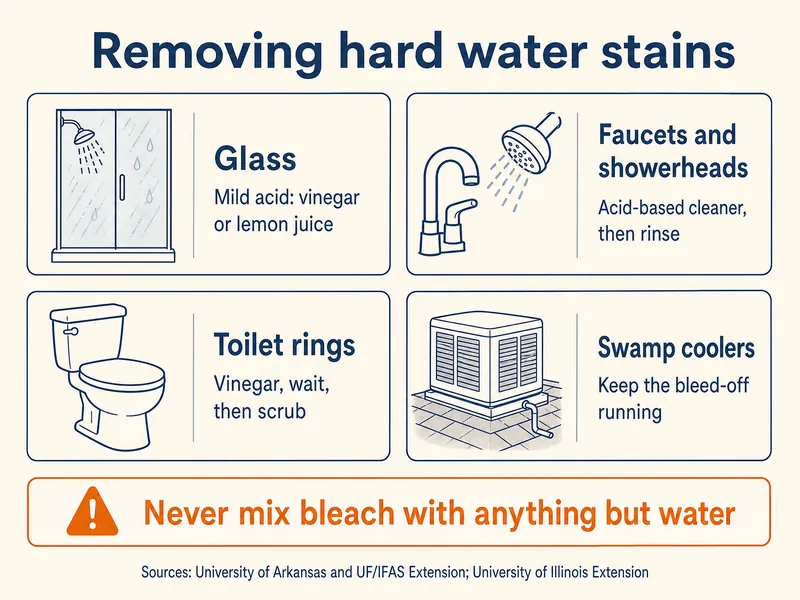
Remove hard water stains from glass with a mild acid, then rinse and dry. The University of Arkansas Cooperative Extension, crediting recipes from University of Georgia Extension, lists acids such as vinegar and lemon juice as the cleaners that break down "mineral deposits, hard water stains". Its window and mirror cleaner is 3 tablespoons of vinegar in a quart of water, with "half and half vinegar and water" for a stronger mix.
For shower glass with heavy spotting, spray the stronger mix, let it sit a few minutes so the acid can work, then wipe with a soft cloth and rinse. Repeat rather than scrubbing hard with anything abrasive. Dry the glass afterward, because the next set of drops will leave new spots if they dry in place.
| Surface | What forms there | First thing to try | Source |
|---|---|---|---|
| Shower glass and mirrors | White spots and film | 3 Tbsp vinegar per quart of water, or half vinegar and half water | University of Arkansas Extension |
| Faucets, aerators, showerheads | Crust at openings and on finishes | Acid-based cleaner, then rinse | UF/IFAS Extension |
| Toilet bowls | Ring at the waterline | 1/4 cup baking soda and 1 cup vinegar, wait 3 to 30 minutes, scrub | University of Arkansas Extension |
| Coffee makers and kettles | Scale where water is heated | Run vinegar or lemon juice through | UF/IFAS Extension |
| Dishwashers | Film and buildup | Regular dishwasher cleaner | UF/IFAS Extension |
| Evaporative (swamp) coolers | Crust on pads and in the pan | More bleed-off; drain and clean the system | University of Illinois Extension |
How do you clean lime scale off faucets and showerheads?
Clean lime scale off faucets and showerheads with an acid-based cleaner, which is what UF/IFAS Extension recommends for "faucets, aerators, and showerheads". White vinegar is the household acid most people have on hand. A removable aerator or showerhead can soak in a bowl of it; one that stays attached can sit in a plastic bag of vinegar held on with a rubber band. Rinse well before using the water again.
Check the finish first. The Arkansas guide warns that lemon juice should not be used on silver and that vinegar, as an acid, needs care on some materials, so read the fixture maker's care instructions before using any acid on plated, colored or specialty finishes. Run the tap for a minute after reinstalling an aerator to flush loosened scale.
UF/IFAS Extension also suggests running vinegar or lemon juice through a coffee maker, using dishwasher cleaners regularly, and flushing and cleaning the water heater with acid-based cleaners. The how to flush a water heater guide covers the tank side of the same problem.
How do you remove hard water rings in toilets?
Remove a toilet's hard water ring by letting a mild acid sit on it, then scrubbing. The University of Arkansas Extension's mild toilet cleaner is 1/4 cup of baking soda and 1 cup of vinegar poured into the bowl, left for 3 to 30 minutes, then scrubbed with a brush and rinsed. Its stronger version is borax sprinkled around the bowl, sprayed with vinegar and left overnight before scrubbing.
Never combine cleaners to make them stronger. The same publication says "NEVER mix ammonia and bleach together" and "Never mix bleach with anything but water", because mixing can release toxic fumes; if any products are combined, do it in a well-ventilated area.
Why do swamp coolers scale up so fast?
Swamp coolers scale up fast because they work by evaporating water, and evaporation leaves the minerals behind in the pan and on the pads. University of Illinois Extension, writing about evaporative cooling pads, says bleed-off is critical "because salts and mineral concentration builds as the water is evaporated". Without enough bleed-off, "deposits will build up on the surfaces of the evaporative pad", which reduces cooling.
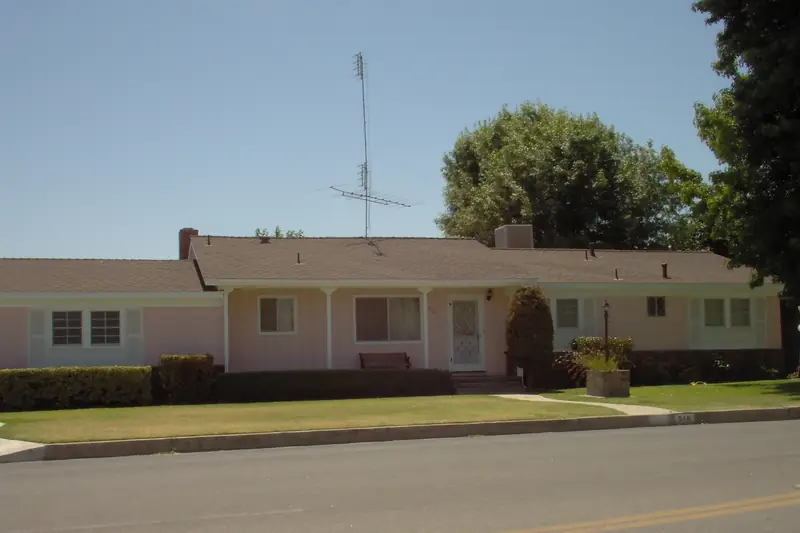
The valley's summers make this a long season. NOAA's 1991–2020 normals put Lancaster's Fox Field at 35.6 days a year at or above 100 °F and Palmdale's airport station at 36.0, so a roof cooler on a 1950s ranch house may run for months. Illinois Extension's rule is simple: "Reduce bleed off for softer water and increase for harder water", and if scale appears, increase the bleed-off rate.
At the start and end of the season, drain the pan, clean it and replace pads that are crusted with minerals; Illinois Extension notes that cleaning compounds with an organic acid help with descaling. Swamp cooler water lines on the roof are also exposed in winter, which the frozen pipes guide covers.
How do you prevent hard water stains?
Prevent hard water stains by keeping water from drying on surfaces and by cleaning before scale builds up. A squeegee or towel on shower glass after each use removes the drops before they leave minerals. Wiping faucets dry, descaling aerators and kettles on a routine and running a dishwasher cleaner regularly keep moderately hard water manageable.
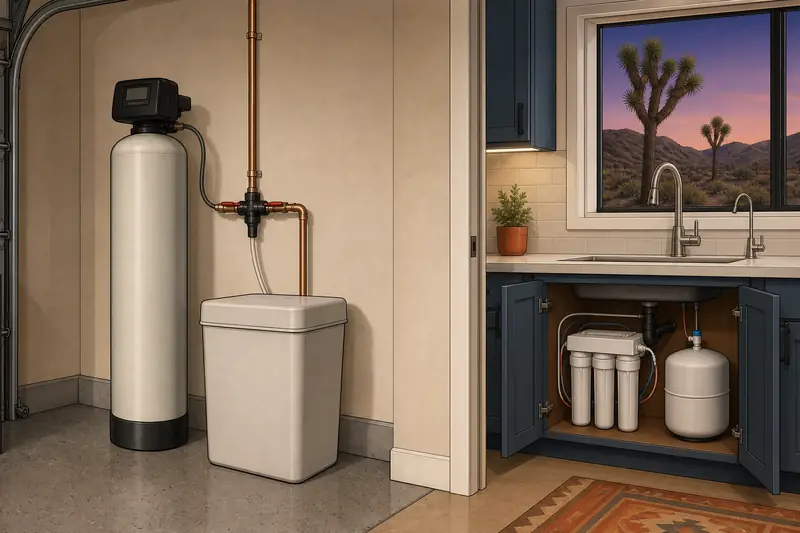
Treatment is the other route. A water softener removes calcium and magnesium for the whole house, and UF/IFAS Extension reserves its softener suggestion for water past 180 mg/L; on the valley's moderately hard city water it is a comfort choice rather than a necessity, as the softener decision guide explains. A salt-free conditioner leaves the minerals in the water, so it does not stop spots that form when water dries. For spotless drinking glasses and coffee, a reverse osmosis tap is another option.
How we put this page together
Sources: University of Nebraska–Lincoln Extension G1491 (effects of hard water), the University of Arkansas Cooperative Extension's Clean and Green Homemade Cleaners page (recipes credited to University of Georgia Extension), UF/IFAS Extension Marion County's Water Quality Series: Hard Water (2021, updated 2022), University of Illinois Extension's page on evaporative cooling pads, the Water Quality Association glossary (scale), NOAA NCEI 1991–2020 climate normals for Lancaster Fox Field and Palmdale Airport, and the 2025-data supplier reports for hardness. Checked October 2026. Left out: brand-name cleaners, forum hacks and any health claims about hard water.
Common questions
Will vinegar damage granite or marble counters?
Vinegar is an acid, and acids can harm some surfaces. Check the counter maker's or installer's care instructions before using it on natural stone, and use a cleaner they approve.
What removes hard water stains from car windows after sprinklers hit them?
The same mild acid works: a vinegar and water mix applied, left briefly and wiped off, then the glass rinsed and dried. Adjusting sprinklers so they do not hit the car stops new spots.
Why does my kettle scale up faster than my faucets?
Heat drives scale. The Water Quality Association notes that water with calcium or magnesium carbonates is especially likely to scale when heated, so kettles, coffee makers and water heaters build crust first.
Is the white crust on a showerhead harmful?
Calcium and magnesium scale is a nuisance; Nebraska Extension says removing hardness is not necessary for health reasons. Cleaning restores flow through blocked nozzles.
How often should a swamp cooler be cleaned in the Antelope Valley?
At least at the start and end of the cooling season, and whenever scale shows on the pads or pan. Increasing bleed-off for harder water, as University of Illinois Extension advises, slows the buildup between cleanings.
Can lemon juice be used instead of vinegar?
Yes, for most mineral deposits; the University of Arkansas Extension lists both as acids for hard water stains. It warns not to use lemon juice on silver.
Related guides
More help: see our home page on Antelope Valley home water.