
Tap water
Lancaster CA Water Quality: What the Reports Show
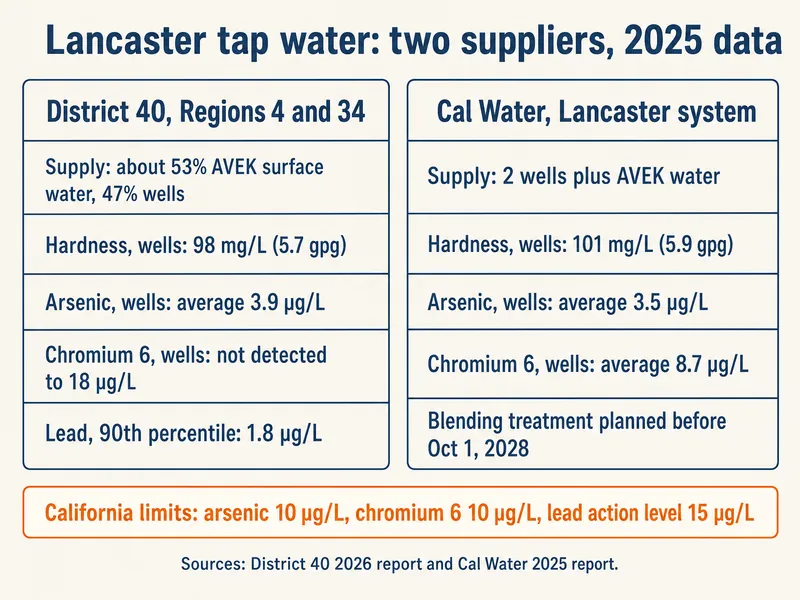
Lancaster CA water quality depends on the supplier: District 40's wells averaged 98 mg/L hardness and 3.9 µg/L arsenic, with chromium 6 up to 18 µg/L; Cal Water's report says chromium 6 was detected above the limit.
On this page
Key takeaways
- Lancaster's main supplier is District 40 of the LA County Waterworks Districts, through Regions 4 and 34; Cal Water and small mutual water companies serve other pockets.
- About 53% of District 40's Lancaster water in 2025 was AVEK surface water (treated or banked) and 47% came from District wells.
- District wells averaged 98 mg/L (5.7 gpg) of hardness and 3.9 µg/L of arsenic, against an arsenic limit of 10 µg/L.
- District 40's 2026 report lists chromium 6 in its wells from not detected to 18 µg/L; as a large system its chromium 6 compliance date was October 1, 2026, and the report does not discuss it.
- Cal Water's 2025 Lancaster report found chromium 6 in its wells at 6.1 to 11 µg/L (average 8.7) and plans blending treatment before October 1, 2028.
- Lead at the 90th percentile was 1.8 µg/L in District 40's 2025 sampling, under the 15 µg/L action level; the report says that in 2025 the water "met or surpassed all health-based drinking water standards".
This guide is not a water utility and not District 40 or Cal Water. Each supplier's own report is linked below, and its figures are quoted with the report year.
Who supplies water in Lancaster, CA?
Lancaster's largest water supplier is LA County Waterworks District 40, whose Regions 4 and 34 cover Lancaster and Desert View Highlands. The City of Lancaster runs no drinking water system of its own in these reports. California Water Service (Cal Water) runs a separate small Lancaster system, and some neighborhoods are on mutual water companies, which are owned by the properties they serve.
The quickest way to know which applies is the name on your water bill. If you have none, for example because water is part of a rent, the State Water Board's drinking water service area map shows the system boundary around an address. The guide to who supplies your water lists every Antelope Valley supplier with its report.
What does the District 40 water quality report show?
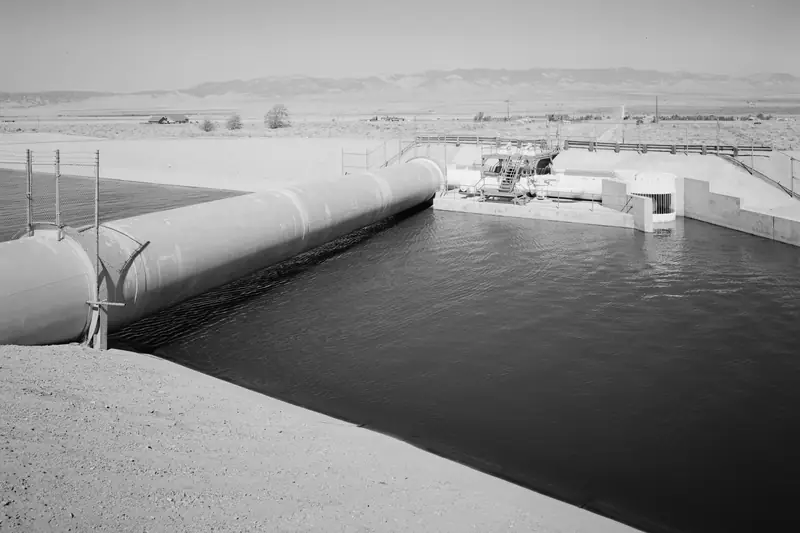
District 40's report for Regions 4 and 34, published in 2026 with 2025 data, shows water from two places: about 53% treated or banked surface water bought from the Antelope Valley-East Kern Water Agency (AVEK), which takes it from the State Water Project, and about 47% from District wells. Those wells averaged 98 mg/L of hardness and 3.9 µg/L of arsenic, and chromium 6 in them ranged from not detected to 18 µg/L.
The report tests the two sources separately, so the tables show a column for District wells and one for AVEK's Quartz Hill treatment plant. Results for District wells tend to cover a wider range, because each well draws from a different part of the aquifer. Disinfection is with chlorine, which the report lists at 0.9 to 1.1 mg/L (average 1) against a maximum residual level of 4.0 mg/L. The report's own summary states that "in 2025, your water met or surpassed all health-based drinking water standards."
| Measure | District 40, Regions 4 and 34 | Cal Water, Lancaster system | California limit |
|---|---|---|---|
| Supply | About 53% AVEK surface water, 47% District wells | 2 wells plus AVEK Quartz Hill plant | - |
| Hardness, wells (average) | 98 mg/L (5.7 gpg), range 30 to 320 | 101 mg/L (5.9 gpg), range 61 to 140 | No health limit |
| Arsenic, wells | ND to 9.9 µg/L, average 3.9 | 3.2 to 3.7 µg/L, average 3.5 | 10 µg/L MCL |
| Hexavalent chromium, wells | ND to 18 µg/L | 6.1 to 11 µg/L, average 8.7 | 10 µg/L MCL (since Oct 1, 2024) |
| Nitrate (as N) | ND to 5.4 mg/L, average 1.4 | 1.3 to 2.3 mg/L | 10 mg/L MCL |
| Lead, 90th percentile | 1.8 µg/L (2025, 0 of 50 sites over) | ND (2023, 0 of 10 sites over) | 15 µg/L action level |
How hard is Lancaster tap water?
Lancaster tap water is moderately hard on average: District 40's wells came in at 98 mg/L (5.7 gpg) on average for 2025, and the AVEK water blended in measured 95 mg/L (5.6 gpg). The USGS puts 61 to 120 mg/L in its moderately hard class. Individual District wells, though, ranged from 30 to 320 mg/L, so a home close to a hard well can get noticeably harder water than the average suggests.
Cal Water's Lancaster wells averaged 101 mg/L (5.9 gpg). At these levels expect some spotting and kettle scale; a softener is a comfort choice rather than a need. The Antelope Valley water hardness page compares every system, and do you need a water softener covers the trade-offs.
Is there arsenic in Lancaster water?
Yes, at low levels below the limit: District 40's wells ranged from not detected to 9.9 µg/L in 2025, an average of 3.9 µg/L, and Cal Water's wells measured 3.2 to 3.7 µg/L. The federal and California limit (MCL) is 10 µg/L. Arsenic in Antelope Valley groundwater is natural; a USGS study (publication 2012-3033) found it high in 28% of the valley's primary aquifers, the most common trace-element problem it measured.
District 40 has dealt with this before. A USGS study for Los Angeles County (publication 2008-3043) found high arsenic concentrated in the deepest parts of some wells; sealing those sections lowered arsenic by an average of 84 percent. Homes on private wells near Lancaster are not covered by any of this, which is why the arsenic in well water page recommends a lab test.
How much chromium 6 is in Lancaster water?
District 40's 2026 report lists hexavalent chromium (chromium 6) in its Lancaster wells from ND (not detected) up to 18 µg/L during 2025, with water bought from AVEK's Water Bank at 3.1 µg/L and none detected at the Quartz Hill plant. The report prints this under "other parameters" and does not quote an average this guide can read.
District 40 serves most of Lancaster and much of Palmdale, well beyond the 10,000-connection size line, so under the state schedule its chromium 6 compliance date was October 1, 2026, which has now passed. Its 2026 report lists well results up to 18 µg/L and does not discuss chromium 6 compliance. For how its wells stand against the 10 µg/L limit, ask District 40.
Cal Water's Lancaster system states its position, though in two places that read differently. Its wells measured 6.1 to 11 µg/L, average 8.7, and Cal Water's report says chromium 6 was detected above the limit: the system footnote says it "was detected at levels that exceed the chromium-6 MCL. While a water system of our size is not considered in violation of the chromium-6 MCL until after October 1, 2028," Cal Water is "planning to install blending treatment prior to October 1, 2028." The same report's general chromium 6 section says treatment has already been installed and the water served meets the standard; Cal Water can say which applies to a given address. California's limit of 10 µg/L took effect on October 1, 2024, with deadlines set by system size. The hexavalent chromium page explains the limit and the certified home filters.
What about lead in Lancaster homes?
Lead was low in the most recent sampling: District 40's 90th-percentile lead result was 1.8 µg/L in 2025, with none of 50 homes above the 15 µg/L action level, and Cal Water's 2023 sampling found none detected at the 90th percentile. The action level falls to 10 µg/L at the federal level on November 1, 2027.
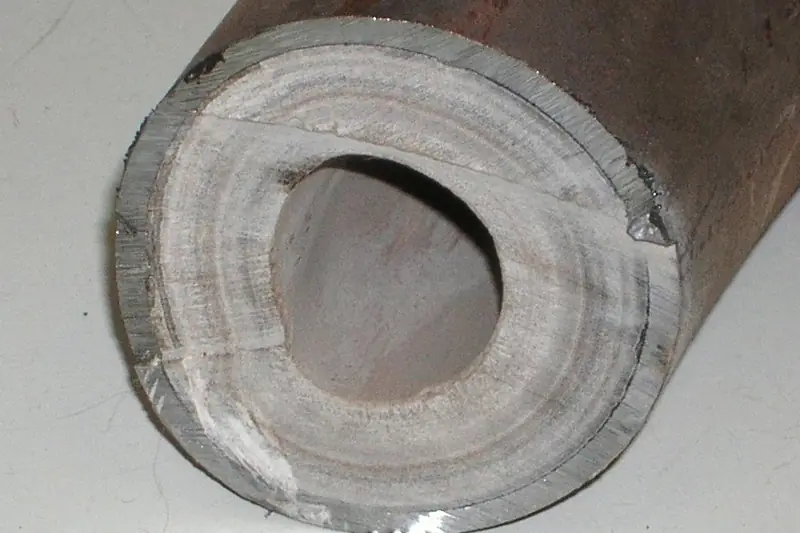
Lead in tap water usually comes from a home's own plumbing, not the supply, so these numbers describe the sampled homes rather than every house. District 40's report says it has completed the service line inventory the Lead and Copper Rule requires. For older homes, the report suggests running the tap for several minutes before drinking after water has sat, and using a filter certified to reduce lead.
Is Lancaster tap water safe to drink?
The suppliers' reports are the place to start. District 40's report says its Lancaster water met every health-based standard in 2025, and none of the regulated results in its primary-standard table exceeded an MCL; its chromium 6 well results, up to 18 µg/L, sit in a separate table with no compliance discussion. Cal Water's system is inside the compliance period for the chromium 6 limit, which it has until October 1, 2028 to meet. Neither report describes Lancaster water as unsafe.
Two limits on that answer are worth knowing. A report describes the system, not the pipes inside one house, and it does not cover mutual water companies, which publish their own. If a result concerns you, the guide to reading a water quality report shows how to compare it with the MCL and the public health goal, and what to ask the supplier.
Lancaster water by the numbers
- 53%Share of District 40 Regions 4 and 34 water that came from AVEK surface water in 2025LA County Waterworks District 40
- 3.9 µg/LAverage arsenic in District 40 Lancaster wells, 2025 (MCL 10 µg/L)LA County Waterworks District 40
- 8.7 µg/LAverage chromium 6 in Cal Water's Lancaster wells (MCL 10 µg/L, system deadline Oct 1, 2028)Cal Water 2025 Lancaster CCR
- 10 µg/LCalifornia's hexavalent chromium MCL, effective October 1, 2024State Water Board
How we put this page together
This page is based on LA County Waterworks District 40's Regions 4 and 34 report published in 2026 (2025 data), Cal Water's 2025 Lancaster system report (samples 2023 to 2025), AVEK's 2025 LA County system report, the State Water Board's hexavalent chromium pages and FAQ (updated November 2024), and USGS publications 2012-3033 and 2008-3043, all opened on October 26, 2026. Units: µg/L equals parts per billion (ppb) and mg/L equals parts per million (ppm), which is how the reports print them. Left out: mutual water company results (their reports were not reviewed), the District 40 chromium 6 average (misprinted in the report), and scores or grades from aggregator websites.
Common questions
Does the City of Lancaster supply my water?
Not in any report this guide reviewed. District 40, Cal Water and mutual water companies supply drinking water in Lancaster, and your bill names which one.
Why does Lancaster water smell of chlorine?
Both District 40 and Cal Water disinfect with chlorine, and District 40 reported a residual of about 1 mg/L in 2025. That level is well under the 4.0 mg/L maximum; a carbon filter at the tap removes the taste.
Does Lancaster water have fluoride added?
District 40's report lists fluoride in its wells at 0.2 to 0.7 mg/L (average 0.5) under the 2 mg/L California limit, with "erosion of natural deposits" as a typical source. It does not say fluoride is added; ask the supplier if this matters to you.
What are PFAS results for Lancaster?
District 40's 2026 report says one well exceeded the state notification level for a PFAS compound but not the response level, so the well stayed in service and regulators were notified. Its report has the details.
Where is District 40's full report posted?
LA County Public Works posts every Waterworks District report on its water quality and reports page, including the Regions 4 and 34 report used here.
Is Desert View Highlands water the same as Lancaster's?
Yes, in the reports: District 40 covers Lancaster and Desert View Highlands in one combined report for Regions 4 and 34.
Should a Lancaster home test its own tap?
On District 40 or Cal Water, the supplier's report covers what it delivers; a home test mostly shows what household plumbing adds, such as lead. A private well is different and needs regular lab testing.
Related guides
More help: see our home water guide for the Antelope Valley.