
Water heaters
How to Flush a Water Heater Step by Step
How to flush a water heater: shut off the gas or power, run a hose from the drain valve to a drain, and let supply pressure push sediment out until the water runs clean, as A.O. Smith's manual sets out.
On this page
Key takeaways
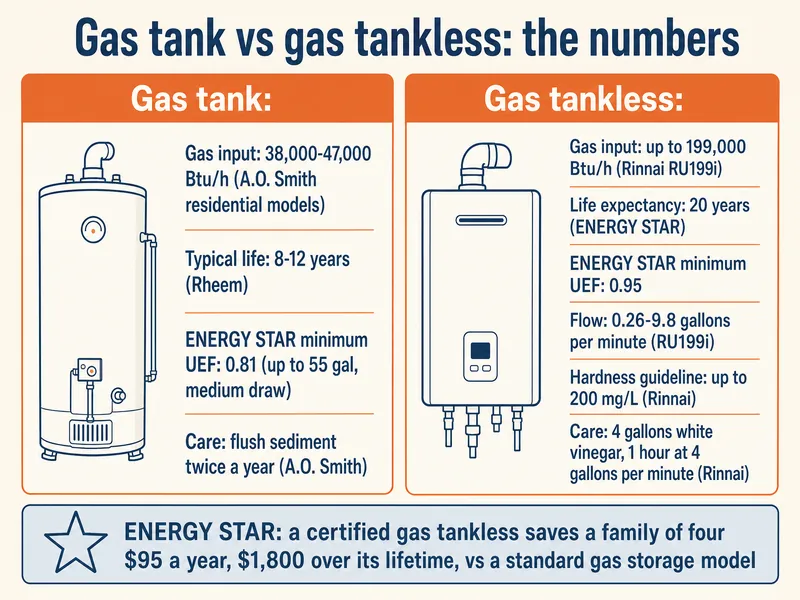
- A.O. Smith's residential gas manual recommends that the tank "be drained and flushed every 6 months" (manual 326940); Rheem's advice is once a year.
- The A.O. Smith flush keeps the cold inlet open, so supply pressure scours the tank floor while the drain valve runs.
- Never relight a gas heater or restore power to an electric one until the tank is full: A.O. Smith says dry elements are destroyed.
- Rinnai's tankless manual calls for 4 gallons of undiluted white vinegar circulated for at least 1 hour at 4 gallons per minute.
- Rinnai's water quality guideline lists total hardness up to 200 mg/L; Lancaster's District 40 wells averaged 98 mg/L in 2025 but single results reached 320.
- The relief valve should be tested at least once a year, a good job to do on flushing day.
Flushing by the numbers
- 6 monthsHow often A.O. Smith recommends draining and flushing a residential gas tankA.O. Smith manual 326940
- 3 minutesHow long to keep a hot faucet running after steady flow, to purge air when refillingA.O. Smith manual 326940
- 4 gallonsUndiluted white vinegar for descaling a Rinnai tankless heaterRinnai
- 200 mg/LTotal hardness ceiling in Rinnai's water quality guideline for its RU-series tankless heatersRinnai installation manual
Why flush a water heater?
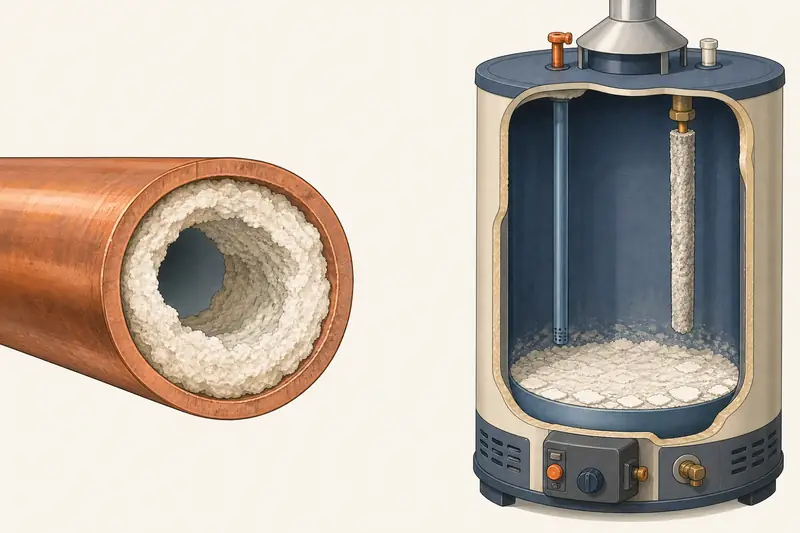
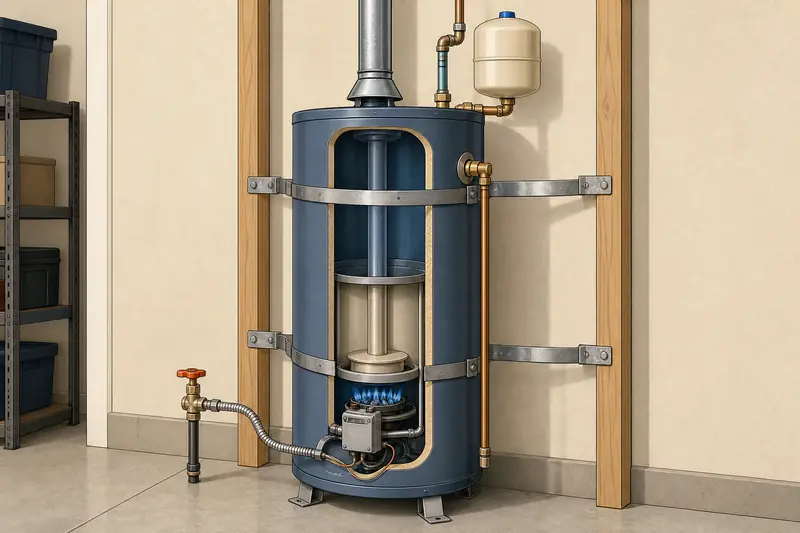
Flushing a water heater clears the mineral sediment that settles on the bottom of the tank. On a gas heater that layer sits right over the burner, so heat has to pass through it to reach the water. A.O. Smith's troubleshooting chart lists "sediment or lime in tank" as a cause of insufficient hot water, slow recovery and high operating costs, with "drain/flush" as the correction.
Rheem gives the same reason in simpler terms: removing sediment "improves efficiency and extends tank life". It also ties the rumbling or popping some tanks make to hardened sediment on the tank floor. A flush will not undo years of neglect, but done regularly it keeps the layer thin.
How often should you flush a water heater on hard water?
Flush a tank at least once a year, and every six months if the maker's manual says so or the water is hard. The two big makers differ here: A.O. Smith's gas manual says every 6 months, while Rheem says annually. Follow the manual for the heater in the garage; the model number on the rating plate finds it.
Most Antelope Valley tap water sits in the middle of the hardness scale. The latest supplier reports give city and district averages between 63.3 mg/L in Quartz Hill and 116 mg/L for Palmdale Water District's wells, which the USGS classes as moderately hard. Homes on well water are a different case. District 40's Lancaster wells ran from 30 to 320 mg/L in 2025 (Regions 4 and 34 report), and a private well can be harder still, so a six-month schedule makes sense there. The hardness page has each system's figures.
How do you flush a water heater step by step?
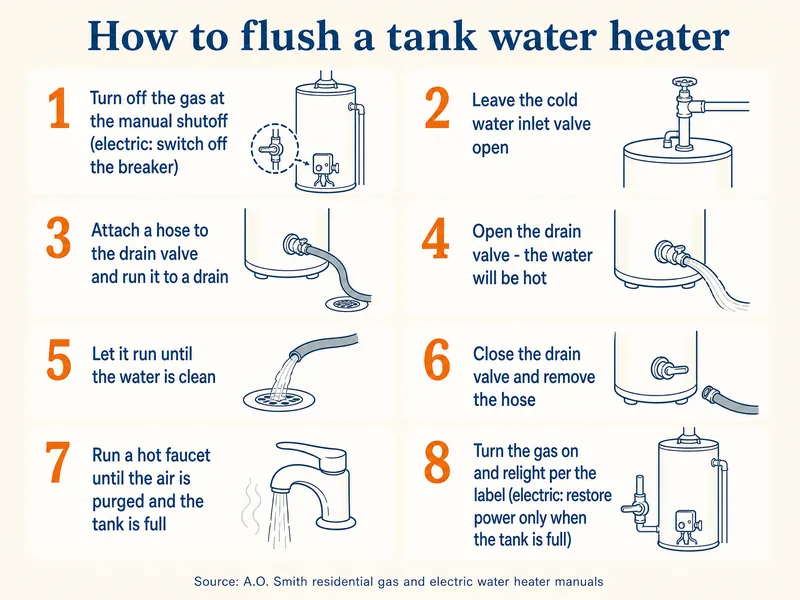
The steps below follow A.O. Smith's "To Flush The Water Heater Storage Tank" procedure for gas models, with the changes its electric manual makes. Read the manual for the heater at hand first; models differ, and the water coming out will be hot.
- Turn off the heat source. Gas: turn the gas off at the manual shutoff valve on the supply line. Electric: switch off the circuit breaker or disconnect.
- Leave the cold water inlet valve open. A.O. Smith's flush runs with system water pressure applied, which stirs sediment toward the drain.
- Attach a garden hose to the drain valve near the bottom of the tank and run it to a floor drain, a driveway or the yard, away from plants that dislike hot water. Secure the hose end before opening the valve.
- Open the drain valve. Expect hot water and cloudy, gritty discharge at first.
- Let it run until the water comes out clean. On a tank that has not been flushed in years, that can take several minutes.
- Close the drain valve and remove the hose.
- Make sure the tank is full. Open a hot water faucet indoors and let it run until the air is out and the flow is steady; A.O. Smith says to keep it open 3 minutes after a constant flow when refilling a drained tank.
- Turn the heat back on. Gas: open the gas valve and relight following the lighting label on the heater. Electric: restore power only once the tank is full, because A.O. Smith warns that powering elements that are not under water "will destroy them".
For a full drain instead, close the cold inlet, open a hot faucet to let air in, and let the tank empty through the hose. That is the method A.O. Smith gives before shutting a heater down for a long absence or for freezing weather. While the hose is still connected, test the temperature-pressure relief valve by lifting its lever a few times with nobody near the discharge pipe; A.O. Smith says it should be checked at least once a year.
| Heater | Shut off first | How the flush works | How often |
|---|---|---|---|
| Gas tank (A.O. Smith 326940) | Gas at the manual shutoff valve | Cold inlet open, drain valve open, run until clean | Every 6 months |
| Electric tank (A.O. Smith 321249) | Electric power | Drain through the hose, flush as needed to remove sediment | Per the manual; power back on only when full |
| Tank, any brand (Rheem) | Per the manual | Drain sediment from the tank | Once a year |
| Tankless (Rinnai RU series) | Power, then the hot and cold isolation valves | Pump 4 gallons of white vinegar through the heat exchanger for 1 hour, then rinse 5 minutes | At least yearly; more often on hard water |
What if the drain valve clogs with sediment?
If the flow slows to a trickle or stops, close the drain valve, then decide whether the job is worth pushing. Many tank drain valves are small, and flakes of scale can jam them part-open, which A.O. Smith's leak checklist flags as a common source of drips: "water from a drain valve may be due to the valve being slightly opened".
A drain valve that keeps leaking after it is closed usually needs a new washer or a new valve. A.O. Smith's manual walks through replacing the drain valve washer, which means draining the tank first. If the valve will not close at all, shut off the cold water to the heater and the gas or power, and have a licensed plumber replace it; the hiring guide explains how to check a license.
How do you descale a tankless water heater?
A tankless heater is descaled, not drained: white vinegar is pumped through the heat exchanger through the service ports on its isolation valves. Rinnai's installation manual for its RU-series condensing models lists the steps: turn off the controller and the power, close the hot and cold shutoff valves, connect a pump to the cold-side service valve and a drain hose to the hot side, and circulate 4 gallons of "undiluted virgin, food grade, white vinegar" for at least 1 hour at 4 gallons per minute.
Then rinse. Rinnai's procedure drains the vinegar out, runs fresh water through the heater for five minutes, and cleans the inlet filter screen before reopening the valves and restoring power. Its consumer flushing page says to flush "at least once a year" and to use no chemical cleaners of any kind.
Hardness decides how often. Rinnai's water quality guideline for these units lists total hardness "up to 200 mg/L", and it says that where water is hard it "must be treated and/or the heat exchanger flushed regularly"; scale damage to the heat exchanger is not covered by its warranty. Most valley city water is well under 200 mg/L, but some wells are not. The tankless guide covers the rest of the ownership cost.
When should you not flush an old tank?
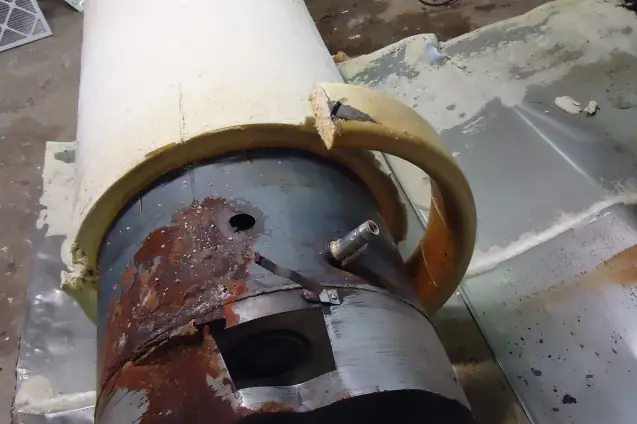
Neither the A.O. Smith nor the Rheem guidance quoted here makes an exception for older tanks, so the question is practical rather than a rule. A tank already showing the end-of-life signs Rheem lists, water at the base, rusty hot water or loud rumbling, is near replacement whatever a flush does. Opening a drain valve that has not moved in a decade can also start a leak at the valve that did not exist before.
On a heater past 10 years old with no flushing history, weigh one careful flush against putting that effort into planning a replacement. If it is flushed, stay with it the whole time, and have a bucket and the cold water shutoff in reach. The lifespan guide shows how to read the heater's age from its serial number, and the replacement cost page lists what a new install involves.
How we put this page together
The steps on this page come from the A.O. Smith gas manual numbered 326940 (draining, refilling, flushing, drain valve and relief valve sections) and its residential electric manual 321249, Rinnai's RU-series condensing tankless installation and operation manual (section 6.3) and its consumer flushing page, and Rheem's lifespan article (March 2026). Hardness figures are from the suppliers' 2025 reports as listed on this site's hardness page, plus the USGS hardness scale. Everything was checked in October 2026. Not included: chemical descalers, flushing schedules from contractor blogs, and any claim that flushing an old tank causes it to fail, for which no maker source was found.
Common questions
Should the cold water stay on while flushing a water heater?
In A.O. Smith's flushing procedure, yes: the cold inlet stays open so supply pressure pushes sediment out the drain. For a full drain, the cold inlet is closed and a hot faucet is opened instead.
How long does it take to flush a tank?
Until the water runs clean, which A.O. Smith gives as the stopping point. A tank flushed on schedule clears quickly; one that has gone years without a flush takes longer.
Can the hose drain onto the lawn?
It can if the yard drains away from the house, but the first water is hot and full of grit. A floor drain or the driveway is easier on plants.
What happens if an electric heater is switched on with an empty tank?
A.O. Smith says applying power to elements that are not under water will destroy them, and its warranty does not cover elements damaged that way. Run a hot faucet until flow is steady before switching the breaker back on.
Is vinegar safe for flushing a tank-type heater?
The tank procedures from A.O. Smith and Rheem use plain water only. Vinegar is the descaling method Rinnai gives for its tankless heat exchangers.
Does a water softener remove the need to flush?
It reduces the scale that hardness causes, but sediment can still collect, and A.O. Smith wants the anode looked at every year where water is softened. The softener guide covers when one makes sense.
What does a Rinnai SS code mean?
Rinnai's manual says the Service Soon (SS) code, when enabled, shows it is time to flush and service the heater.
Related water heater guides
More help: see our Antelope Valley water, wells and septic guide.